RLG Collection Points Map
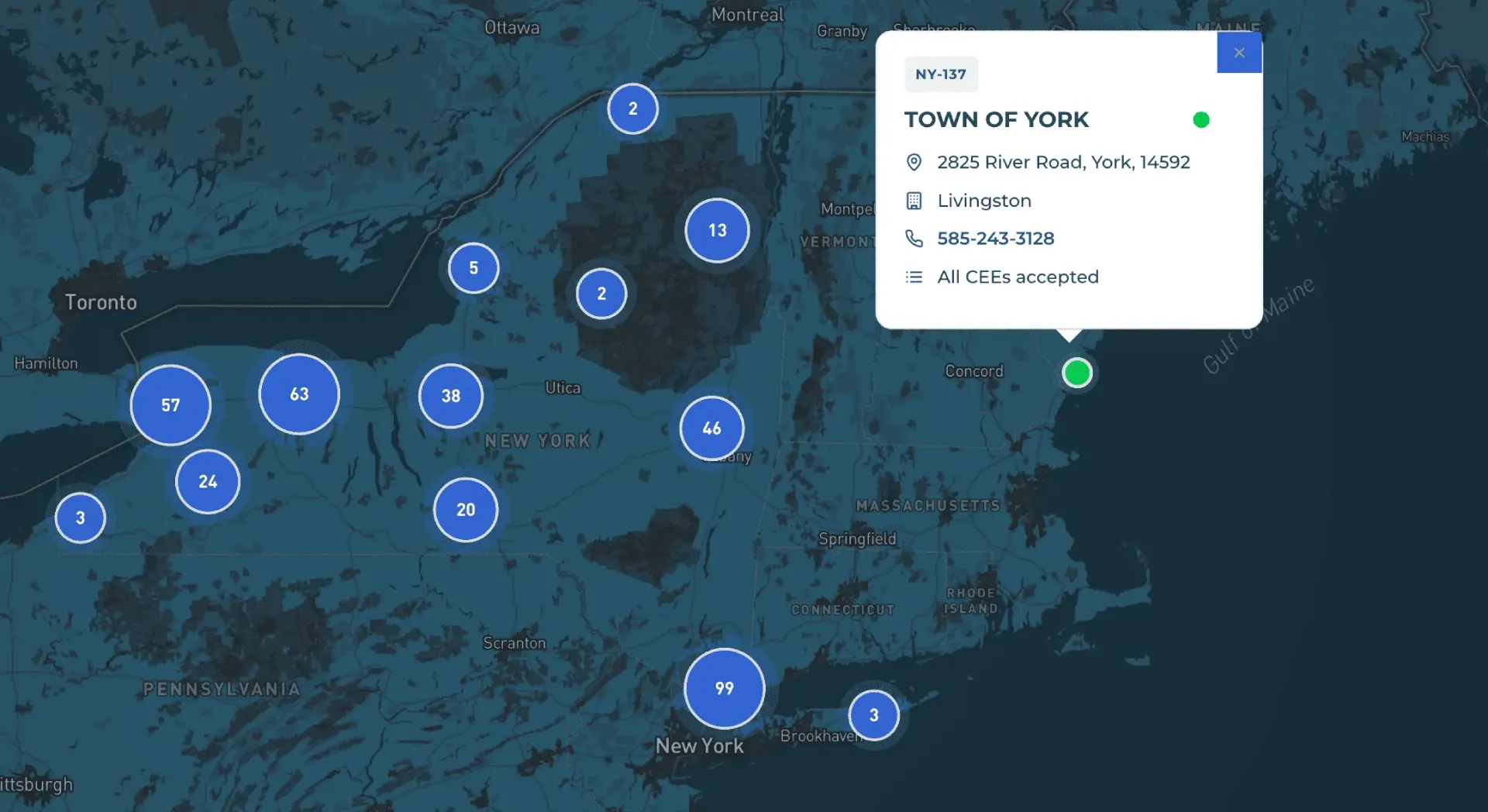
Visit live site ↗A live Mapbox-powered collection point locator for RLG’s U.S. consumer electronics recycling platform, connected to Google Sheets so users can find nearby return locations through continuously updated data.
Client
RLG
Type
Web Application
Role
Design. Build. Data Integration
Year
2026
Overview
For RLG’s U.S. Consumer Electronics Recycling Opportunities platform, I designed and built an interactive collection point locator that helps consumers find nearby drop-off locations for electronic waste recycling. The experience supports RLG’s broader environmental compliance offering by making state-specific collection opportunities easier to access and understand.
The map was built with Mapbox and connected directly to Google Sheets via a published CSV, allowing live location data to flow into the website without requiring manual code updates. This created a scalable and low-maintenance system that supports changing collection networks across different U.S. states.
Process
I developed the tool as a custom WordPress shortcode component tailored to RLG’s website structure and content needs. The system reads structured spreadsheet data, converts each valid row into a mapped location, and automatically matches state-based views through URL detection, making it possible to surface the right collection list within the correct regional page context.
Alongside the map itself, I designed a full interaction layer that included state selection, live search, paginated table results, clickable rows, and custom detail popups. The aim was to create a practical user experience that would work equally well for consumers looking for a nearby drop-off point and for RLG teams managing location data behind the scenes.
Live data integration and scalable content management
A core part of the solution was building the map around a live Google Sheets workflow. Instead of maintaining static map data in code, the website pulls published CSV data from a spreadsheet, which allows location information such as operator name, address, phone number, and coordinates to be updated through a familiar content tool.
This setup made the project easier to scale across multiple markets and state pages while reducing maintenance overhead. It also gave the client a flexible system that could evolve as collection opportunities changed over time.
UX design for map, table, and mobile behavior
I focused the interface on clarity, speed, and ease of use. Users can scan clustered map markers, open detailed popups, search locations across visible records, and use a synced table to browse results more efficiently.
The component was also designed responsively, with mobile-specific adjustments such as collapsible controls and centered popups to keep the experience usable on smaller screens. Visually, the interface was aligned with the RLG brand through custom colors, typography, and component styling.
Outcome
The result is a robust public-facing tool that improves how consumers access electronics recycling opportunities across the United States. By turning spreadsheet-managed data into an interactive map experience, the project helps bridge operational data management with a clear and useful frontend interface.
This work brought together UX design, frontend development, data structuring, and map-based interaction design in a single solution. It shows how a custom Mapbox integration can support environmental compliance services while making sustainability-related information easier to discover and act on.
This project demonstrates the same approach I bring to European urban and civic tech work — turning complex, multi-source spatial data into clear, accessible public-facing interfaces. The architecture (live data integration, location-based filtering, scalable content management) translates directly to city pilot visualisation, partner network maps, and public engagement tools for Horizon Innovation Action projects.
RLG Collection Points
Find a drop-off location near you
Let's work together.
Building a digital presence that needs to stay clear, accessible, and up to date? I design and build digital experiences that connect content, context, and place — from websites to map-based interfaces — and support communication over time.
→ tim@poggemann.de